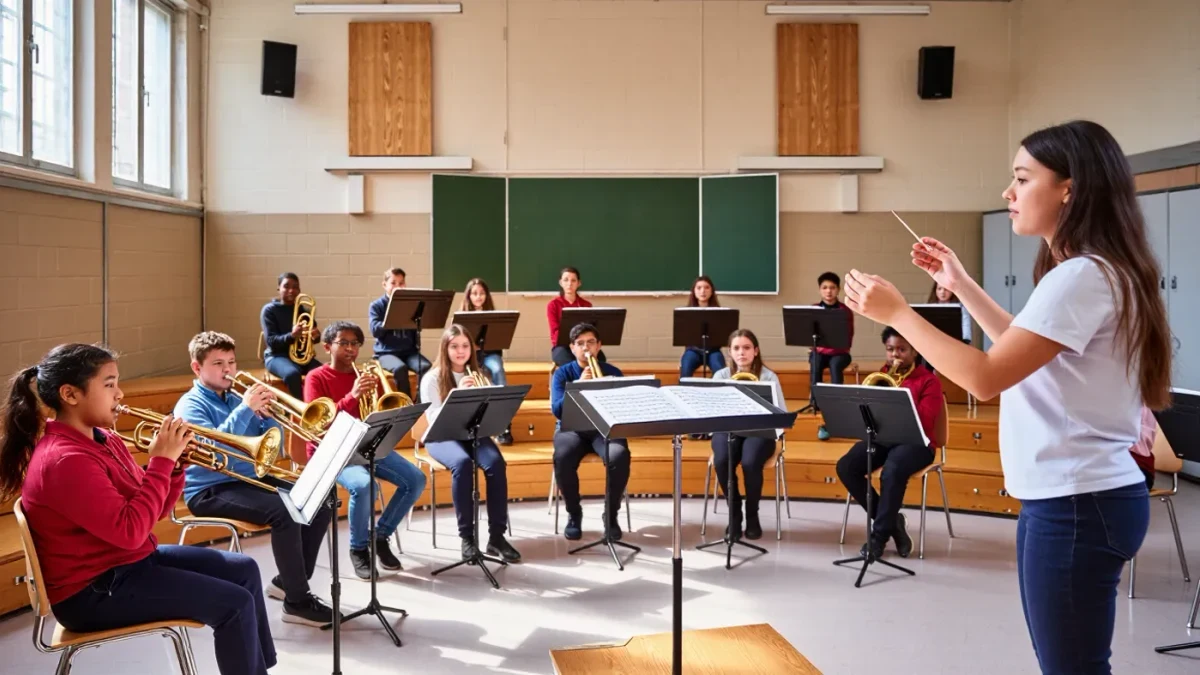
Music education drew coordinated attention from lawmakers in March 2026. On March 6, 2026, Representative Nydia Velázquez, Senator Cory Booker, and Representative Maxwell Frost introduced bicameral legislation to strengthen music and arts education in American schools, per the House press release — a proposal aimed at widening access at a moment when federal education spending faces proposed cuts.
Across the Atlantic, the picture was steadier. Britain's Department for Education confirmed in a written answer on March 4, 2026 that it is providing £36.5 million for the Music and Dance Scheme this academic year, the means-tested program that funds specialist training for young musicians and dancers. In Ireland, the Department of Education announced €100,000 in music education grants to local partner groups, continuing the expansion of Music Generation-style access programs beyond major cities.
Regional programs are moving in the same direction at smaller scale. Devon Education Services in England announced changes to its Music Education Grant funding for 2026-27 that let every school apply for £500 to £1,000 toward a focused music project, with rolling applications through the year — a design that pushes money toward individual school initiatives rather than central services. Taken together, the March 2026 announcements describe a funding environment in which national governments concentrate on elite training and access schemes, while teachers increasingly raise and allocate project money locally.
Why does this funding matter for new audiences?
Because school music programs are where future listeners, and future composers for film and television, first get an instrument in hand. The US bill's sponsors explicitly framed music and arts education as workforce and equity policy, not enrichment; advocacy groups such as NAMM and NAfME have spent the 2026 budget cycle defending the federal Assistance for Arts Education program against a proposed 15.3 percent cut to the Department of Education's discretionary funding. The coming months will show whether the Velázquez-Booker-Frost bills reach a committee hearing — and whether the UK and Irish programs hold their levels into the next budget year.
For more context, read BMI and New Music USA Name 2026 Composition Award Winners.
For more context, read composer residency.
For more context, read national recording registry 2026.